

1978
Wins her first Wimbledon singles title, defeating Chris Evert, and claims her first Grand Slam singles title
Mn
Professional Tennis Player
Claim Your Story
This profile was created to celebrate the athletes who shaped the game. Claim your profile to personalize your story, verify details, and connect directly with your community.
Eighteen-time major champion and a revolutionary all-court legend.
Essentials
martina's story
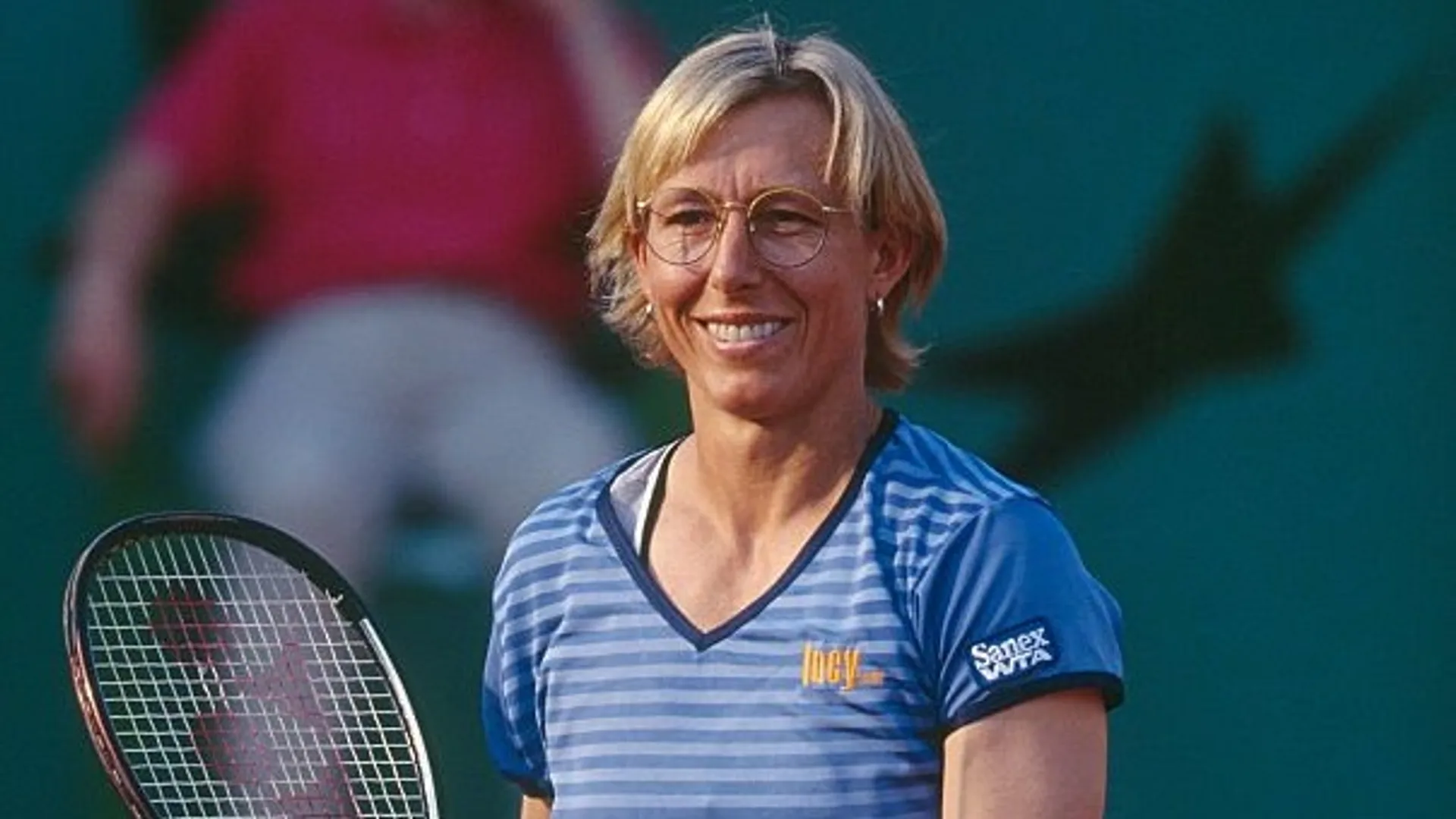
In 1975, Martina Navratilova was eighteen years old and playing in the US Open when she walked into the offices of the United States Immigration and Naturalization Service and requested asylum. She left behind her country, her family, and everything familiar, in a single afternoon, because she understood what staying would cost her: as an athlete under a regime that controlled where she could travel and what she could earn, and as a person who already knew things about herself that Czechoslovakia in 1975 had no framework to accommodate. The defection is the first fact of her career and the one that makes every title that followed legible. She had already demonstrated, before winning a single major, what she was willing to give up in order to be fully herself.
What followed was one of the most dominant careers in the history of tennis across any era or gender. Nine Wimbledon singles titles, the most by any player in the Open Era. Eighteen Grand Slam singles titles. Fifty-nine Grand Slam titles total across singles, doubles, and mixed doubles, a record across genders. Three hundred and thirty-two weeks ranked number one in the world. She won on every surface, against every generation of opponent the tour produced across two decades of competition, and she did it with a physicality and a professionalism that changed how the sport thought about athletic preparation. She was the first player to treat fitness as a competitive weapon rather than a baseline requirement, and the women's game has never fully returned to the assumptions that existed before her.
In 1981 she came out publicly as gay and lost her endorsements almost immediately. She was at the time the most dominant player in the sport and one of its least commercially supported stars, a gap that documented precisely what the sponsorship market thought about who she was off the court. She was also known to bring her own food to tournaments, particular about what she ate in the days surrounding a match in ways that teammates and opponents both noticed, a fastidiousness that extended the same total commitment she brought to everything else into the smallest details of preparation. She continued competing, continued winning, and continued speaking publicly on matters of equality and identity for decades after the playing career ended. The defection at eighteen established the pattern: she assessed what something would cost, decided the cost was worth it, and proceeded. She did that with her country, with her identity, and with every opponent she faced across thirty years. The record is what it is. Nobody else has one like it.
Real questions from fans. Real answers from her.
She hasn't joined yet, but when she does, your question will be waiting.
No answered questions yet. Martina hasn't answered anything yet.
Check back soon.
INDIVIDUAL AWARDS
LEGACY
Shop athlete-owned brands, exclusive collections, limited-edition drops, books, collectibles, and products inspired by the stories that shaped women's sports.
Every purchase helps support athletes and the future they're building.
Built for fans. Powered by athletes.
Martina Navratilova's Collection
160 Items